
When the way people work changes, you need to know.
The agreed process might say one thing while the team has quietly moved on. WorkflowMind helps us spot the difference, check the evidence and keep the picture of how the work gets done useful.
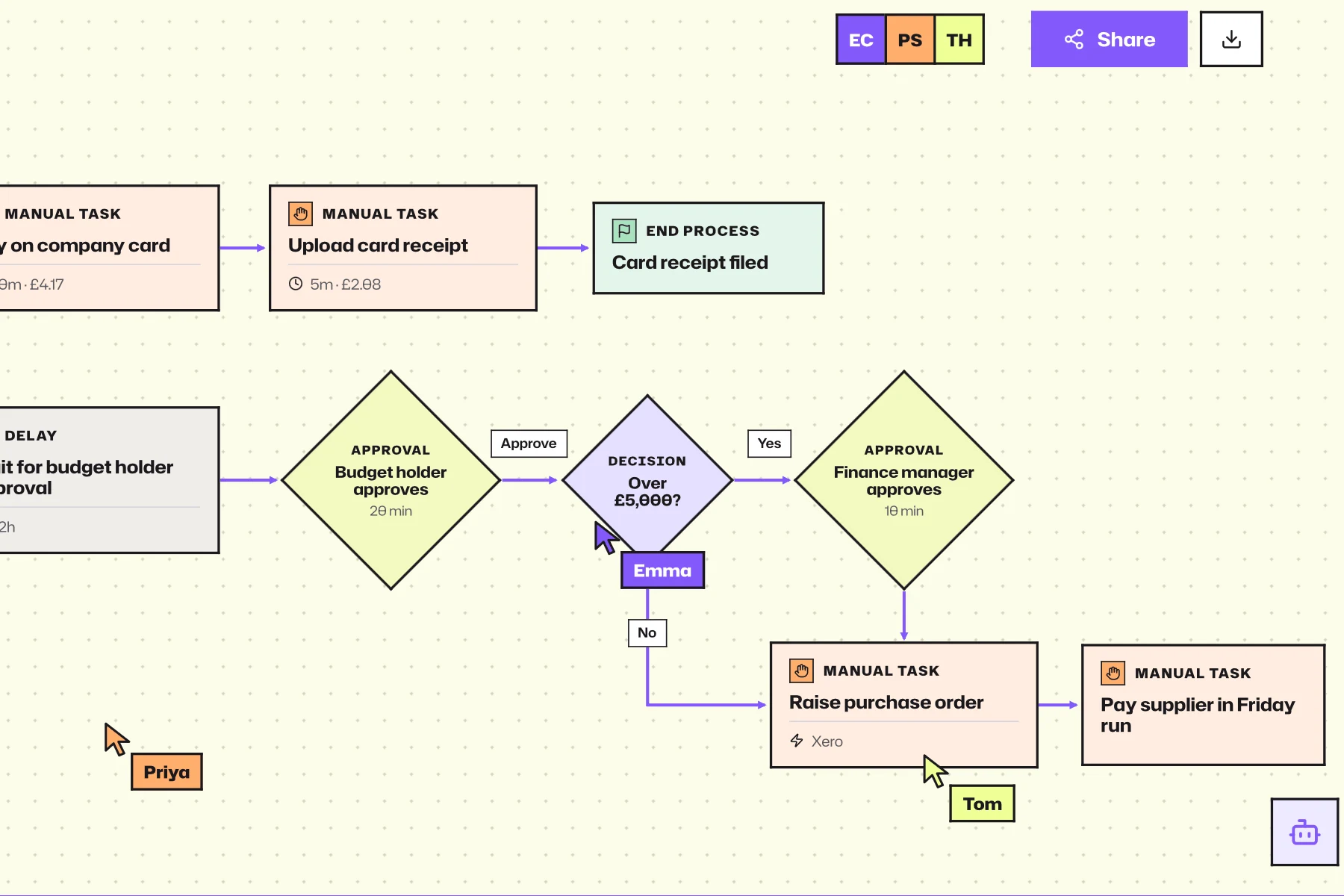
Most process maps start ageing the day they're finished.
A new system changes a handover. A manager leaves. Someone finds a faster way around a recurring problem. Months later, the diagram still looks tidy. The work doesn't.
We use WorkflowMind to compare relevant new information with the processes we've already investigated, rather than asking everyone to explain the business again.
New information becomes a question worth checking.
Agreed conversations
Relevant meetings and supplied transcripts can reveal changing steps and responsibilities.
Notes and updates
Information added to the workspace or through supported connections can be checked against existing maps.
People and systems
Departures and changes to linked automations can expose gaps and dependencies.
Approved AI assistance
Authorised tools can propose a change for the right person to review.
A different account isn't automatically a new rule.
One person's workaround may be another team's exception. A missing step may be a mistake in the map, not a change in the business.
WorkflowMind distinguishes possible changes, corrections, confirmations and deviations. Each finding is linked to what prompted it. A person reviews the suggestion before the approved picture changes.
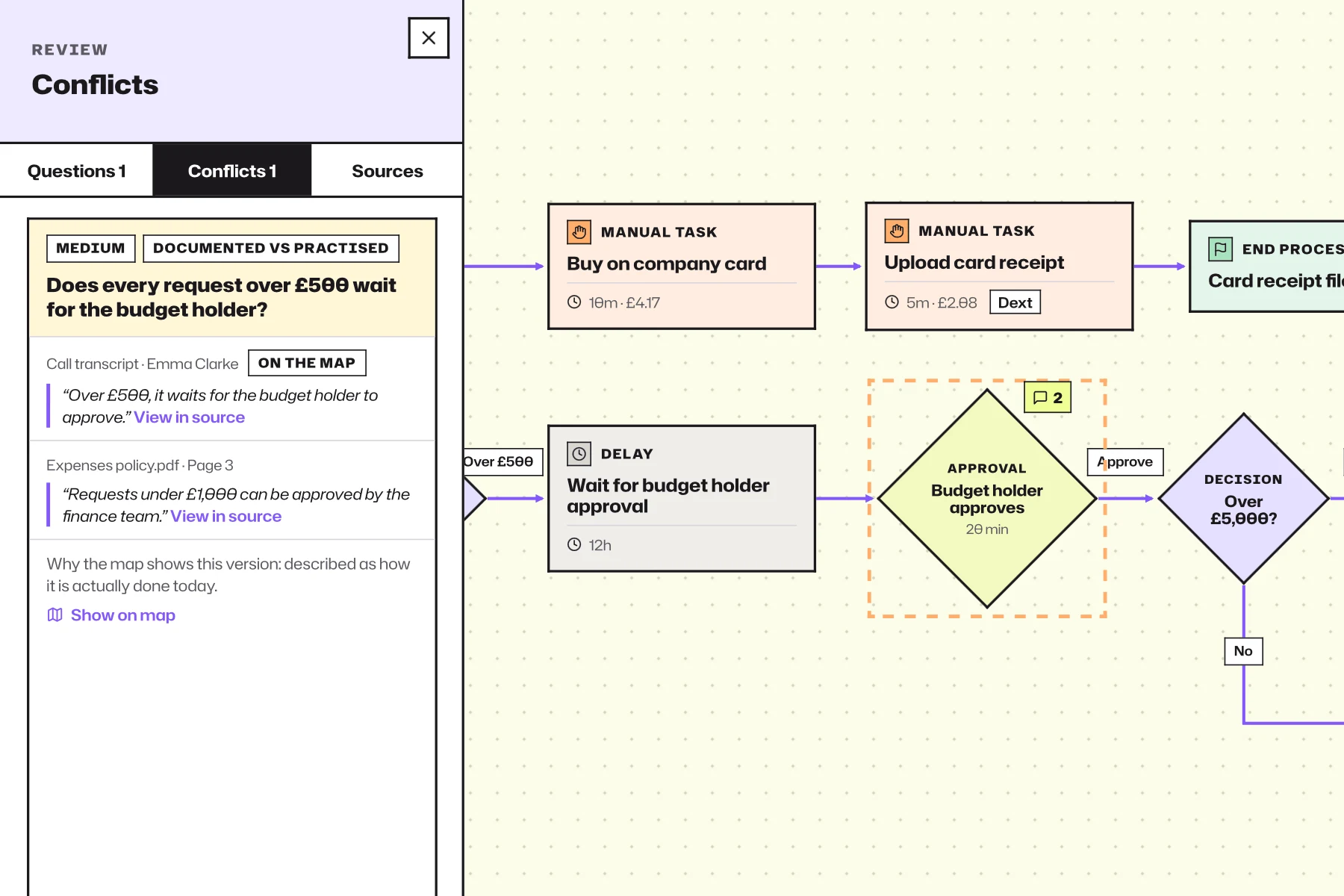
Know which maps need another look.
Maps show their review status, unanswered questions and suggested updates. Accuracy checks can be scheduled, and the review history remains visible.
The objective isn't perfect documentation. It's knowing when the assumptions behind a decision or improvement are no longer dependable.
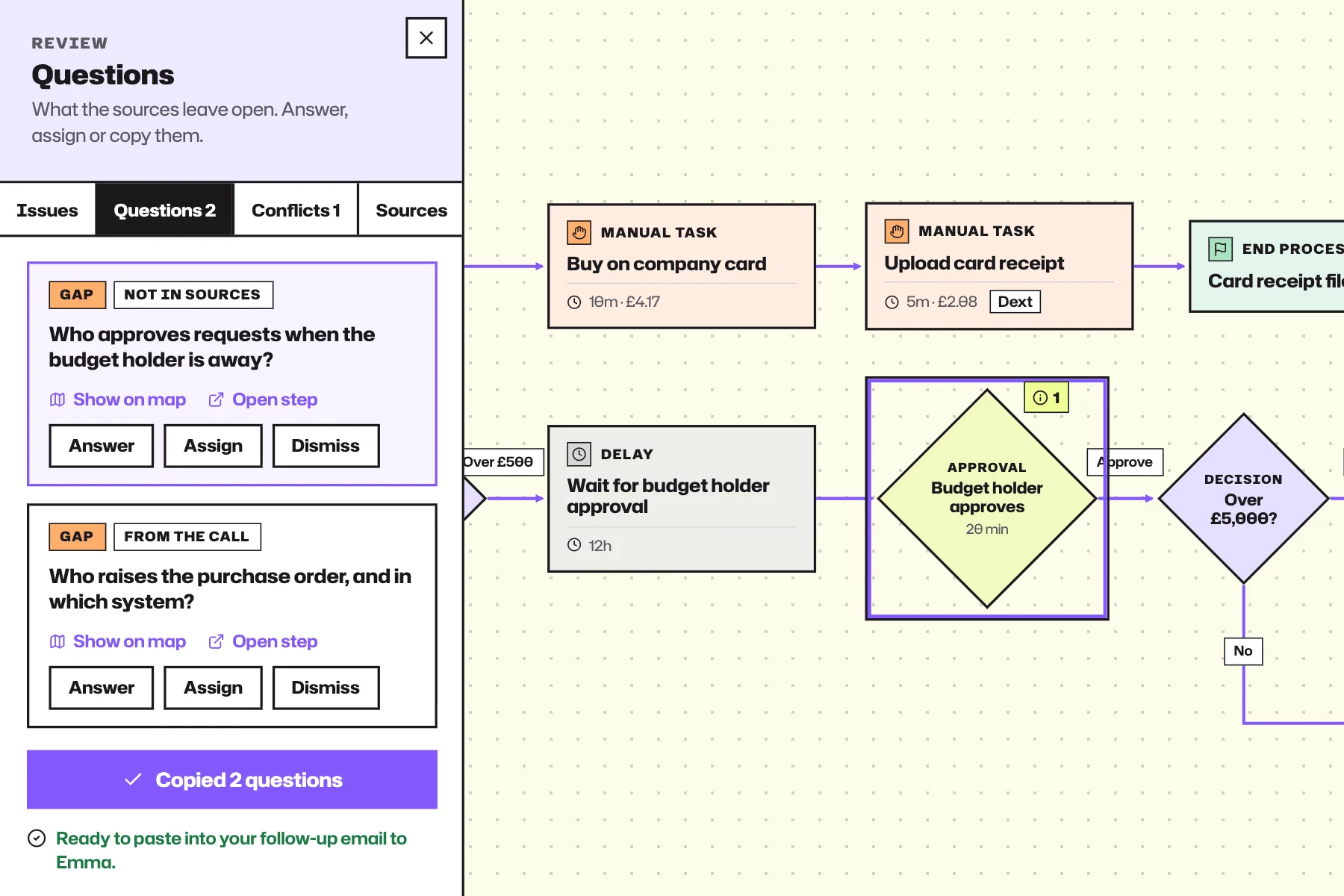
Make decisions using the business you have today.
The current operation, not last year's diagram, should inform a hiring choice, system replacement or new automation.