
Start with the decision. Investigate the reality.
The WorkflowMind QRED method gives each investigation a consistent structure: define the question, examine how work happens, test the available evidence and explain what it means for the decision ahead.
Question → Reality → Evidence → Decision
Question
What do we need to decide?
Define the decision, the assumptions behind it and the evidence needed.
Reality
How does the work actually happen?
Investigate the actual steps, people, exceptions, dependencies and workarounds.
Evidence
What do the findings support?
Connect and test accounts against relevant operational information, recording uncertainties as well as agreements.
Decision
What should leadership consider next?
Present findings, options, implications and prioritised recommendations.
How the investigation works in practice.
We speak to the people involved, use our platform to structure evidence and check discrepancies before presenting findings.
Define the Question
Agree the exact decision and boundaries of the investigation.
Structured Walkthroughs
Capture first-hand accounts from the people carrying out the work.
Platform-Supported Mapping
Turn walkthrough transcripts into connected operational models.
Review and Reconcile
Check where accounts differ and make unresolved questions explicit.
Executive Findings & Recommendations
Present what the evidence supports and what merits action or further assessment.
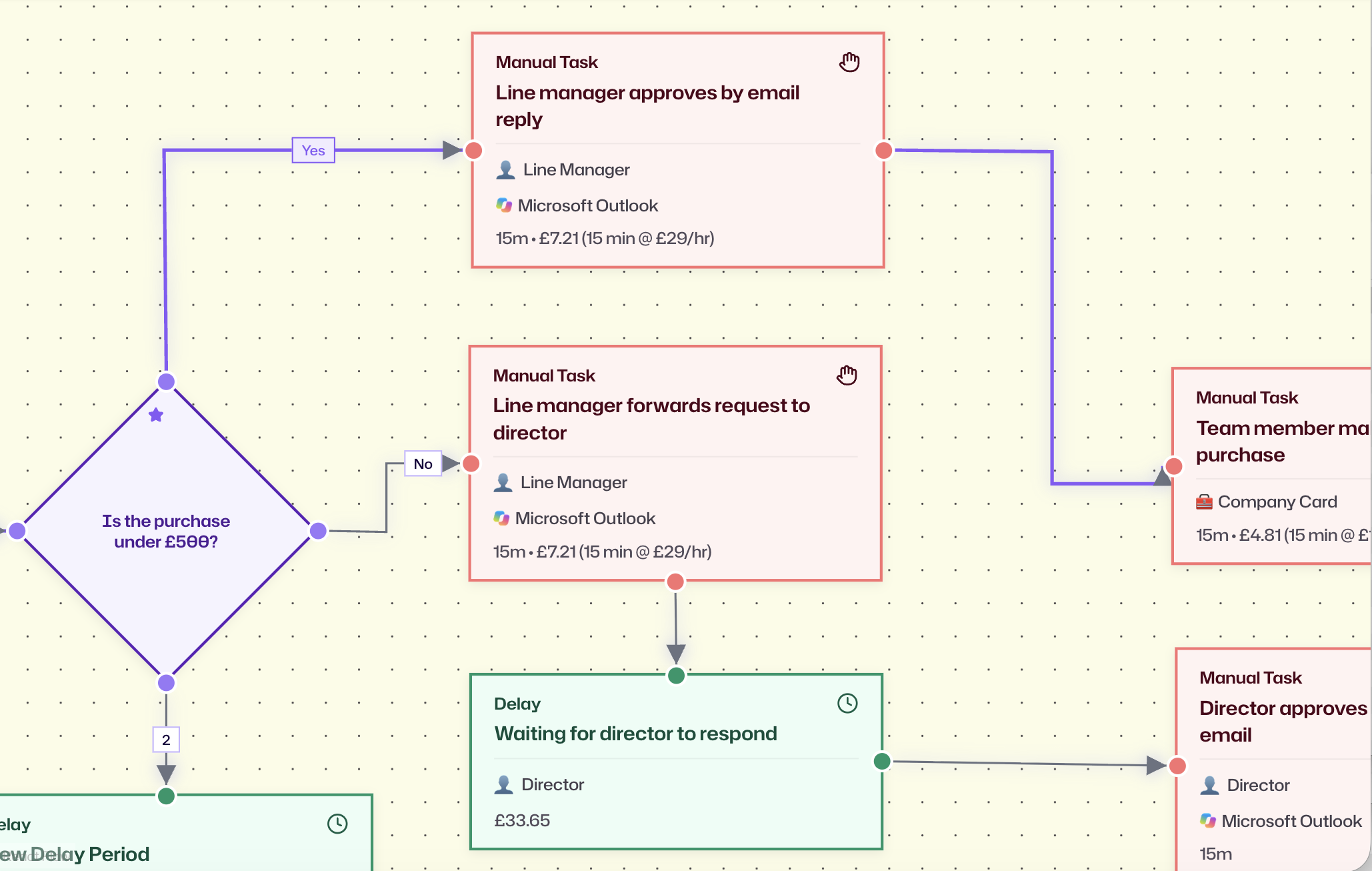
A consistent method, supported by our own platform.
The method defines the investigation; WorkflowMind software helps capture, connect and examine operational evidence. Our team interprets the results and checks them with the people involved.
QRED in practice: an online vehicle retailer.
The retailer's documented sales process seemed straightforward. Investigation exposed widespread corrections, fragile handoffs and reliance on a few individuals.
- Question
- Understand the causes of repeated work and operational pressure in the sales-to-delivery process.
- Reality
- Interview participants and examine order handling, lead assignment and cross-team handoffs.
- Evidence
- Bring together reported findings: 90% of orders needed correction, lead allocation relied on key managers and visibility was limited after handoff.
- Decision
- Use the findings to inform a prioritised 100-day plan for leadership to evaluate.
What would a better decision depend on?
Tell us the question you're facing and the work it would affect.