Capture
Start with the people doing the work. Use a conversation transcript, notes or existing documentation to capture what they know.
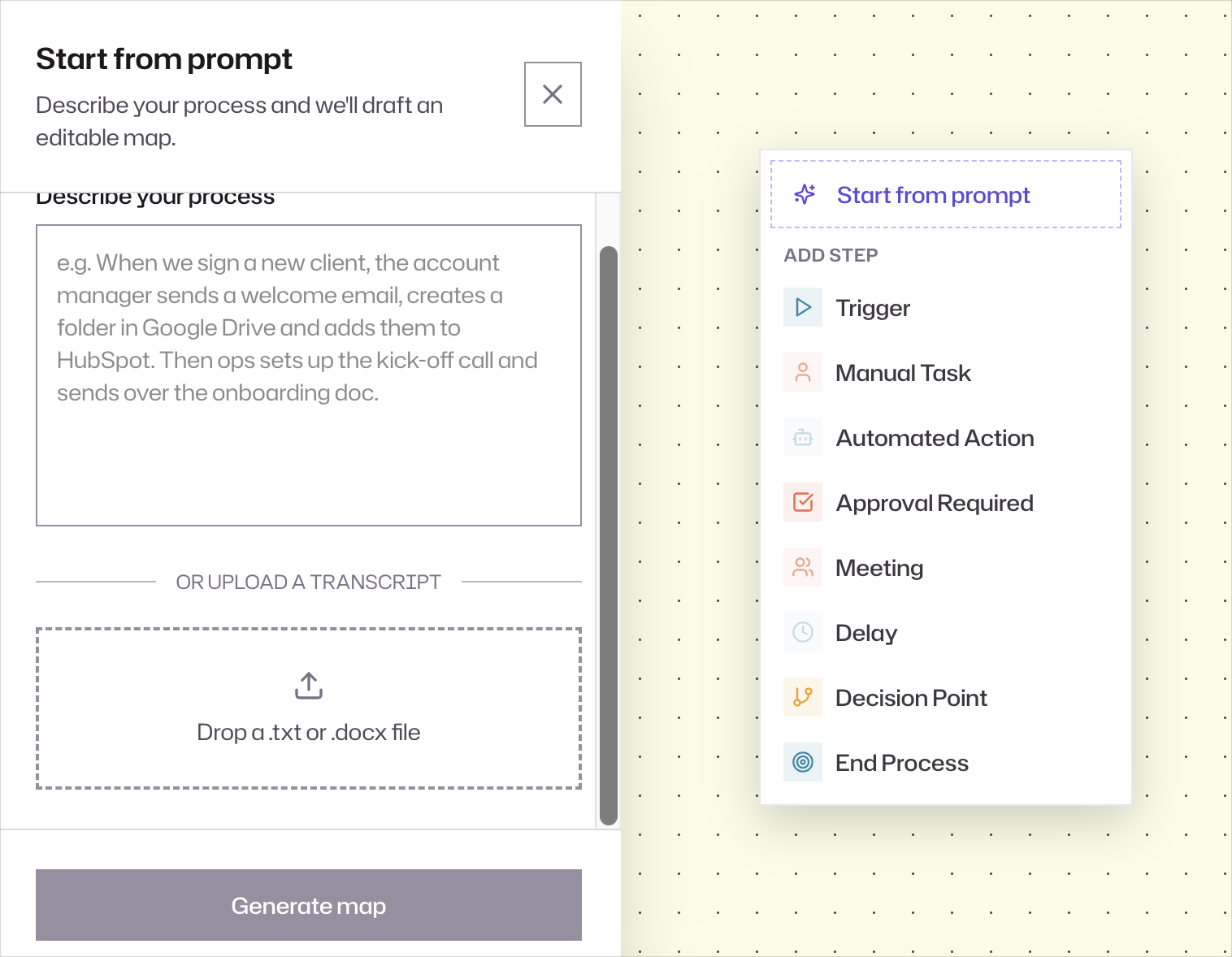

WorkflowMind captures how work really happens and connects it to the people, systems, time, workload and cost behind it.
Build an operational picture you can return to as new questions and changes arise.
A map might show that someone reviews an application. WorkflowMind also shows how often that review happens, how long it takes, who does it and which systems are involved, so you can understand the workload and cost behind the step.
Start with the people doing the work. Use a conversation transcript, notes or existing documentation to capture what they know.
WorkflowMind creates a structured first draft. Review it with the people involved, correct what is not right and develop it as you learn more.
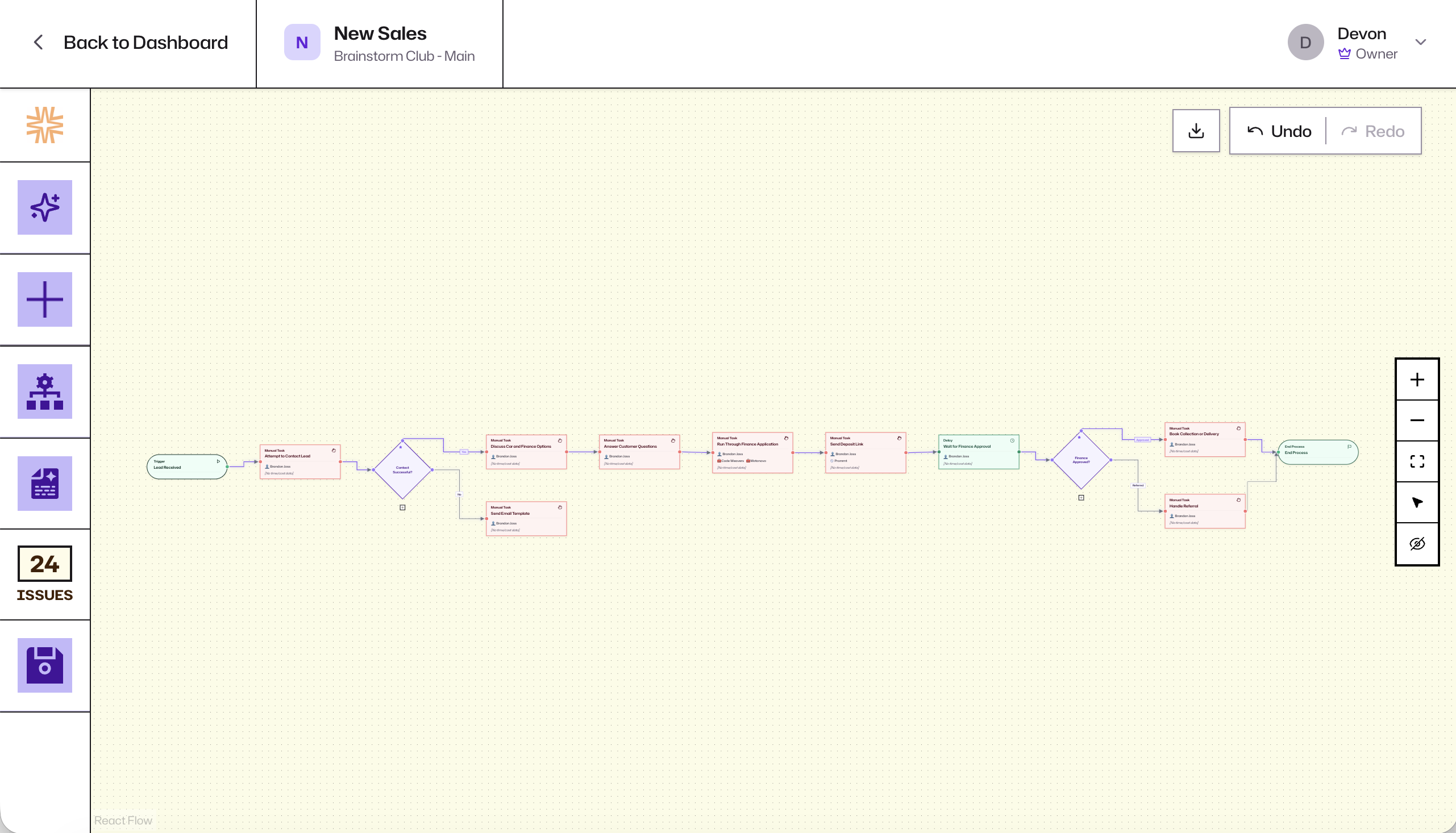
Connect each step to the people, systems, time, frequency, workload and cost behind it.
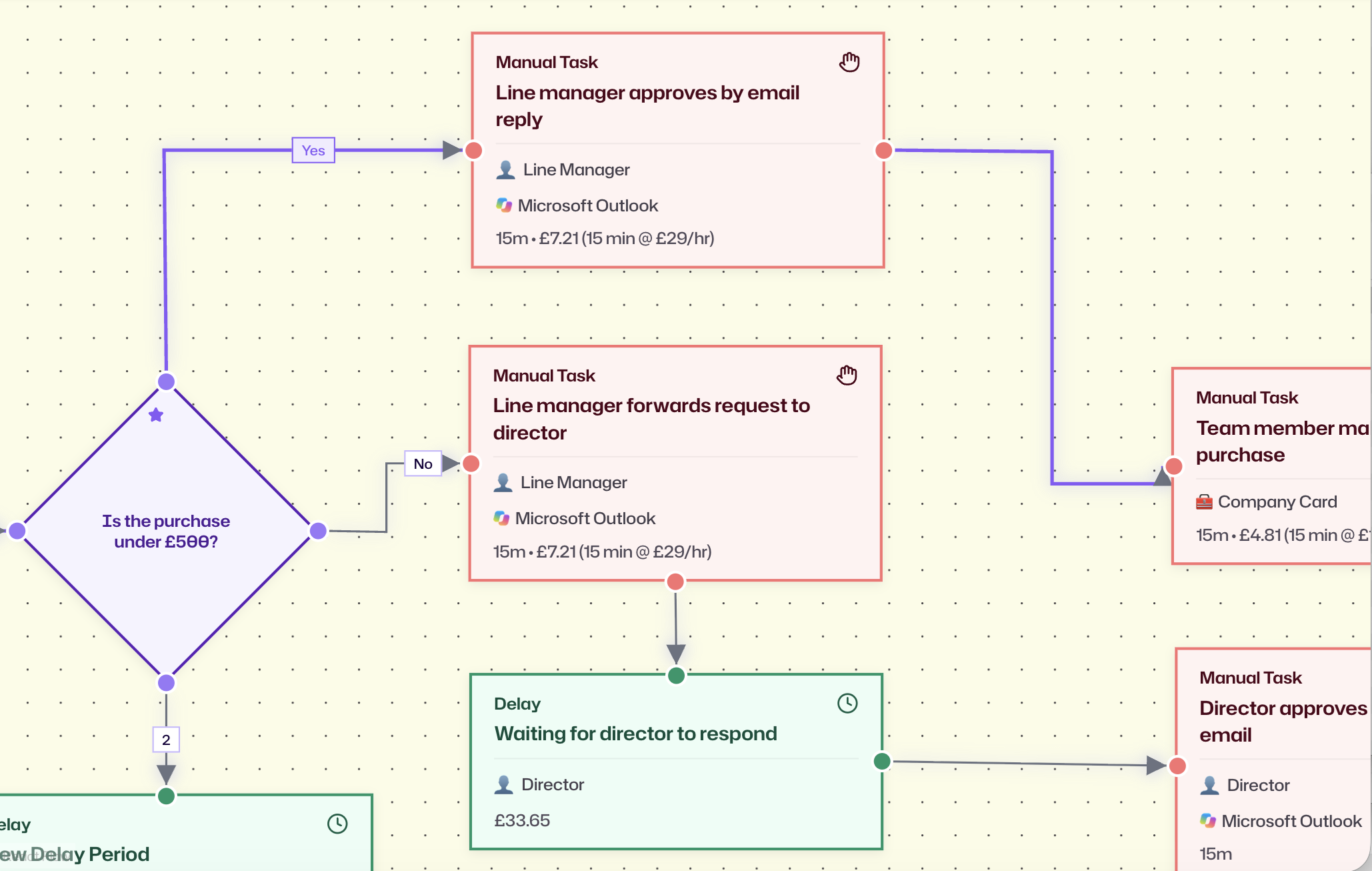
See where effort goes, where work depends on particular people or systems and what deserves further attention.

Keep the evidence current as teams, processes and systems change. The next time a question comes up, you do not have to start discovery from scratch.
Use the evidence you’ve built to investigate a proposed change:
WorkflowMind is built around a structured way of investigating work: start with the question, understand reality, connect the evidence, then decide what deserves attention.
We will lead a focused investigation with your team and use WorkflowMind to build the evidence.
Explore the Operational Diagnostic →Train someone in your organisation to apply the Method and investigate operational questions using WorkflowMind.
Explore Practitioner Training →Consultant? Try WorkflowMind → See how it works with clients →